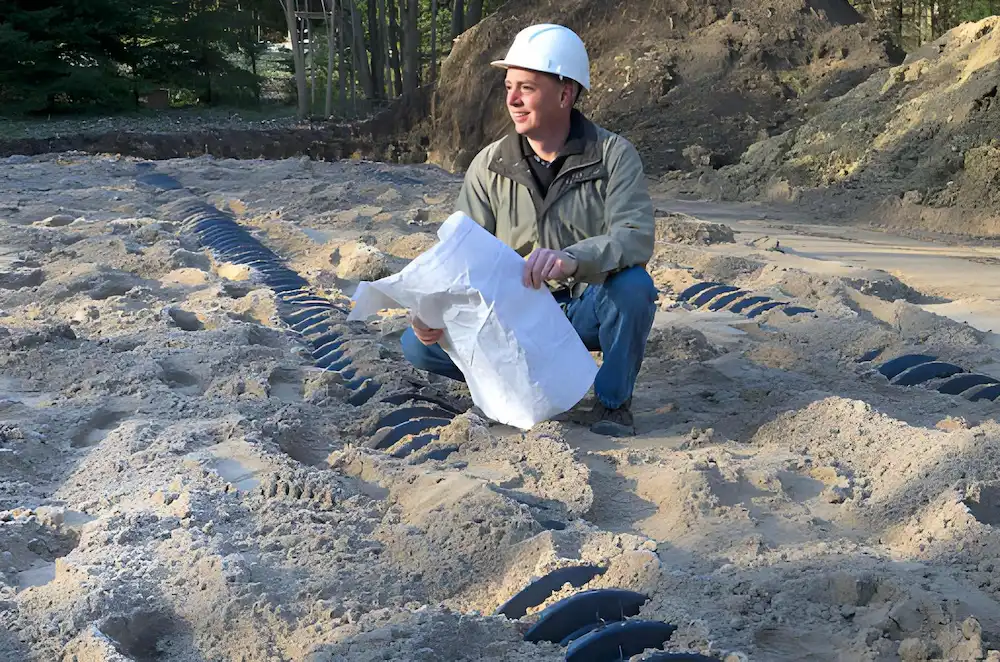
Septic System Design Services
A well-designed septic system treats wastewater efficiently while meeting all Washington State and local county regulations. Septic system design must match your specific site conditions, not a generic template. Soil type, slope, groundwater depth, property size, and expected usage all play a role in what will be approved for your property.
Design begins with understanding how much wastewater your home or building will generate. For most residential projects, design flow is based on the number of bedrooms and typical daily water use. This determines the size of the tank and how large the drain field must be to safely disperse and treat wastewater in the soil.
Every design includes detailed site plans that show tank location, drain field layout, setback distances, and specified depths. These plans become the road map for your installer and the basis for county review. Septic system design also must include a designated reserve area that can be used in the future if the primary drain field ever fails.
What Goes Into a Septic Design
Good septic design is not just about picking a tank size. It is a step-by-step process that turns your property conditions into a buildable, code-compliant plan. A complete design package includes calculations, drawings, and notes that guide the entire project from permitting through installation by your chosen contractor.
- Design flow calculations based on bedrooms or expected occupancy
- Tank sizing and configuration that match state and county standards
- Drain field sizing using percolation rate and soil classification
- Setback distances from wells, property lines, and surface water
- Grading and slope notes to maintain proper drainage
- Locations of inspection ports and risers for future maintenance
- Reserve area identification for long term system planning
In Washington, design requirements can vary by county. King, Pierce, and Thurston Counties each have specific submittal standards and review processes. A complete design package helps reduce back-and-forth revisions with health departments and speeds up permit approval. For many projects, this design work follows a site and soil evaluation, which provides the test data needed to size and place the system correctly.
From Design Plans to Permitting
Once the design is complete, it is prepared as a submittal package for your local health department. This typically includes scaled drawings, soil logs, design calculations, and supporting documentation. The goal is to show that the proposed system will protect groundwater, meet setback rules, and handle the expected wastewater flow.
The permit review process can take several weeks depending on workloads and seasonal demand. Clear, complete design documents help avoid delays. Designs must account for both the primary system and the required reserve area, which gives you a backup location for a future drain field if ever needed. For many homeowners, this design and permitting step comes ahead of new construction, remodels and ADUs, or commercial projects.
Septic design plans are also used by your contractor during installation. Depths, slopes, pipe locations, and tank placement notes all come directly from the design. A solid set of plans can help installers price the work accurately and reduce surprises during construction. Because the design is created to code from the start, it also supports smoother inspections once the system is built.
Schedule Your Septic Design Consultation
Whether you are planning a new home, updating an older system, or adding an ADU, septic system design is a critical step. All Septic Designs LLC creates site-specific plans for properties across King, Pierce, and Thurston Counties. To move your project forward, visit our Services page to see how design fits into the full process, or contact us to discuss your septic design needs.